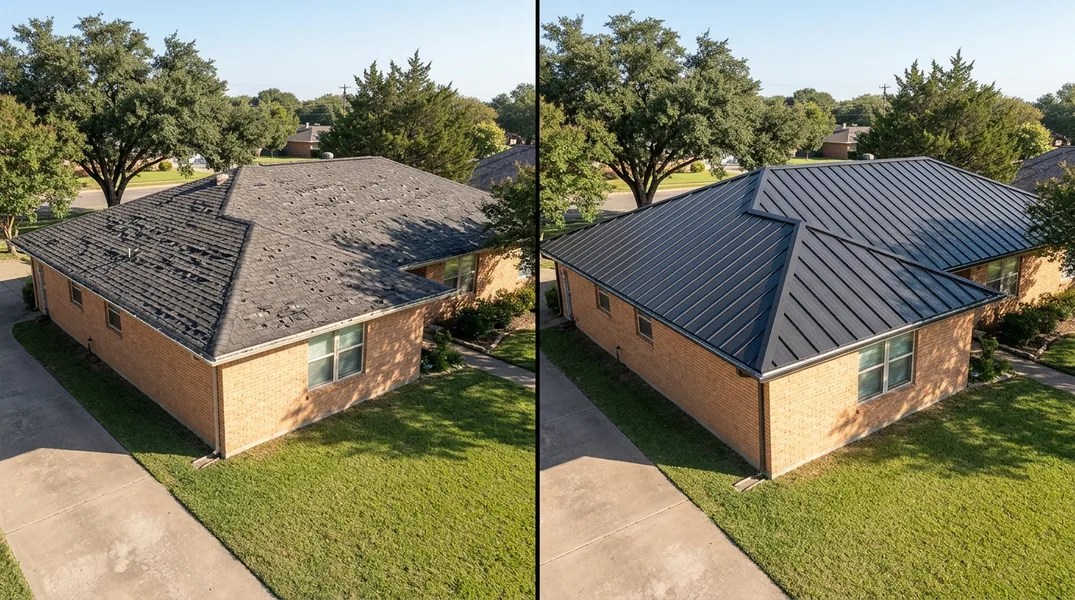
Why Central Texas Hail Is So Hard on Roofs
If you have lived in Waco for more than a season or two, you already know the routine: a sunny spring afternoon turns dark, the radar lights up with purple, and golf balls start bouncing off the driveway. Central Texas sits squarely in what insurers call hail alley, and the storms that roll through McLennan County routinely drop stones from pea size all the way up to softball size. That is not a cosmetic problem. Every impact stresses the roof surface, and the damage compounds year after year.
What makes this region especially tough is the combination of hail and heat. Summer temperatures bake roofing materials at the same time storm season is bruising them, and the expansion and contraction cycle works fasteners loose and opens small cracks into bigger ones. Homeowners in Hewitt and Woodway see the same pattern. So when you compare metal roof vs shingles, the real question is not which material looks nicer on day one. It is which one is still protecting your home after ten or fifteen hail seasons.
How Asphalt Shingles Handle Hail
Asphalt shingles are the most common roof in Texas for good reason: they are affordable, widely available, and quick to install. But they are also the material most vulnerable to hail. The asphalt mat and the mineral granules on top absorb impact rather than deflect it. After a significant storm, granules wash into gutters and off downspouts, leaving bare patches where the asphalt underneath starts to oxidize and crack. You may not see a hole, but the shingle has been weakened, and that is exactly what insurance adjusters look for when they inspect an asphalt shingle roof in Texas.
Hail damage on shingles is often invisible from the ground, which is why so many homeowners discover leaks months later. A shingle that lost its granules in April may not leak until the fall rains arrive. Typical architectural shingles last 15 to 25 years in ideal conditions, but in a hail-prone climate, many Waco roofs get replaced or repaired far sooner. Soft spots, bruised mats, and cracked sealant strips all shorten the roof's effective life, and each repair is a temporary patch on a surface that is already compromised.
Metal Roofing Durability Under Hail
Metal Roof Installation changes the equation because metal deflects impact instead of absorbing it. A quality standing seam panel with a solid substrate and proper fastening will shrug off most hail that would total an asphalt roof. The surface may show a cosmetic dent after an extreme storm, but the panel keeps shedding water and the structure underneath stays dry. That is the core of metal roofing durability: the material does not rely on granules or sealant strips to stay watertight.
Lifespan tells the same story. A well-installed metal roof commonly lasts 40 to 70 years, and many panels carry manufacturer warranties of 30 to 50 years. Compare that to the 15 to 25 years you get from asphalt in this climate, and the math starts to favor metal even before you count storm repairs. Standing Seam Metal Roofing is especially popular here because the concealed fasteners and raised seams leave fewer places for water to find a way in. For homeowners who want the best roofing material for hail, metal is the practical answer, not just the premium one.
Repair Costs, Insurance, and Long-Term Value
Hail damage is expensive in ways that go beyond the roof itself. A shingle roof that gets bruised may need partial replacement, and repeated claims can push your insurance premium up or even lead to a policy non-renewal. Metal roofs often qualify for hail-resistant discounts from Texas insurers, and because they survive storms that destroy shingles, you file fewer claims over the life of the roof. That matters in a market where carriers are tightening underwriting across Central Texas.
The upfront pricing of metal is higher than asphalt, and it is fair to say so. But spread the difference over 40 or 50 years of service and the annual cost often comes out lower, especially once you subtract the repairs, patch jobs, and premature replacements that come with shingles. You can also ask about Metal Roof Over Shingles (Retrofit), which can reduce tear-off labor and disposal costs on some homes. A Metal Roof Replacement is a long-term decision, so it is worth getting real numbers for your specific roof rather than comparing averages.
Metal Roof vs Shingles Near Me: Choosing for Your Waco Home
There is no single right answer for every house. If you plan to move in five years, a quality asphalt roof may be the sensible budget choice. If you plan to stay, if your home has been hit by hail more than once, or if you are tired of filing claims, metal is the stronger investment. Roof pitch, decking condition, HOA rules, and the style of your home all affect which system makes sense, and a local installer can walk your roof and tell you honestly what it needs.
This is where local experience matters. A contractor who works in Robinson and Waco every week knows how local storms behave, which panel profiles hold up best, and how to detail a roof so it stays watertight through the next decade of weather. If you are searching for metal roof installation near me and want a straight comparison for your home, call Waco Metal Roofing at (254) 384-8413 or request a free estimate. We will inspect your roof, explain your options, and give you a clear picture of what survives Central Texas hail.
Looking for a professional metal roofing contractor in Waco? Waco Metal Roofing responds fast for all your metal roofing needs.
Get a Free QuoteOur services: Metal Roof Installation · Standing Seam Metal Roofing · Metal Roof Replacement